If you are learning how to play pickleball you may want to start with the basics of the correct pickleball serving rules. There are several things you need to understand and practice so you don’t create a foul or lose your ability to serve. You may have practiced the actual serve but let’s go over some specifics that you can incorporate into your practices so you get it just right.
Serving Rules for Pickleball
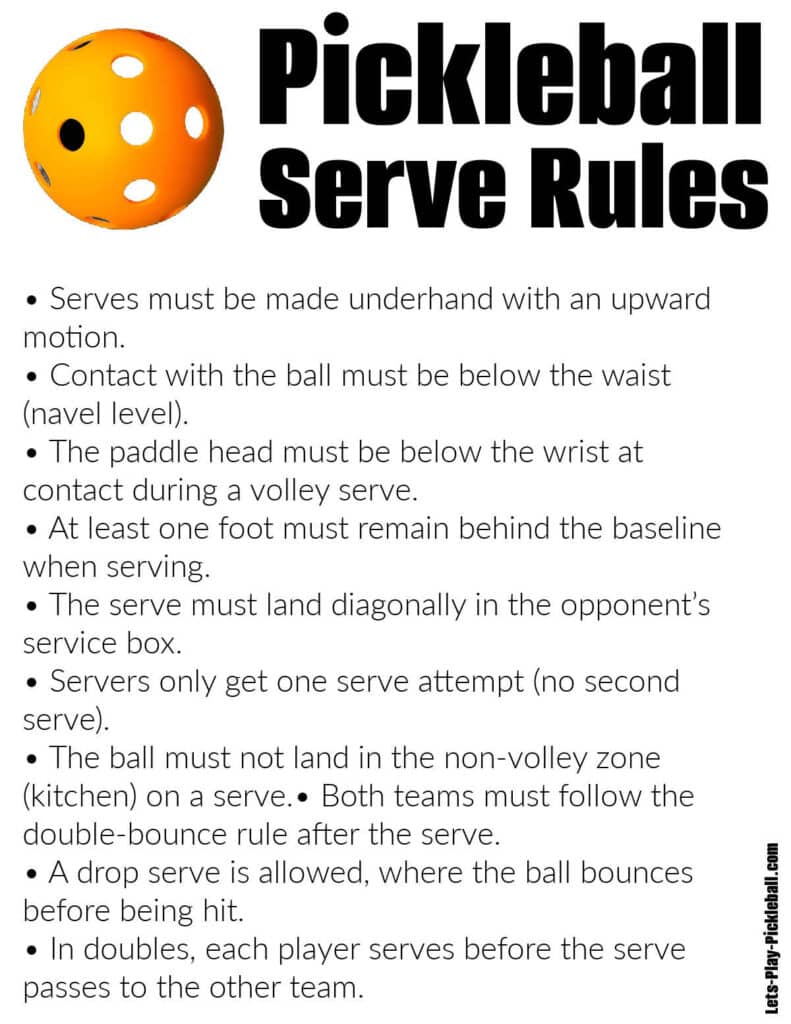
To start, every serve must be made underhand. This means the server must swing the paddle in an upward motion, making contact with the ball below the waist. The waist is defined as the navel area, so the paddle must strike the ball at a point lower than that. Additionally, the highest part of the paddle head must be below the wrist at the moment of contact. These requirements ensure that serves remain controlled and prevent overly aggressive or overhead-style serves that could give an unfair advantage.
Another important rule is that at least one foot must remain behind the baseline when serving. The server cannot step on or over the baseline until after the ball has been struck. However, the server is allowed to stand anywhere behind the baseline, including outside the imaginary extensions of the sidelines and centerline. This flexibility allows players to choose angles and positions that best suit their serving strategy.
The serve must be hit diagonally across the court, landing within the opposite service box. Pickleball courts are divided into right and left service areas, and players must serve from the correct side depending on the score. When the server’s score is even, they serve from the right side of the court; when it is odd, they serve from the left. This alternating pattern continues throughout the game and helps keep track of proper positioning.
The double-bounce rule is another critical element connected to the serve. After the ball is served, the receiving team must let it bounce before returning it. Then, the serving team must also let the return bounce before hitting it. Only after these two bounces have occurred can players begin volleying the ball in the air. This rule eliminates the possibility of immediate net play following a serve and extends rallies, making the game more accessible and strategic.
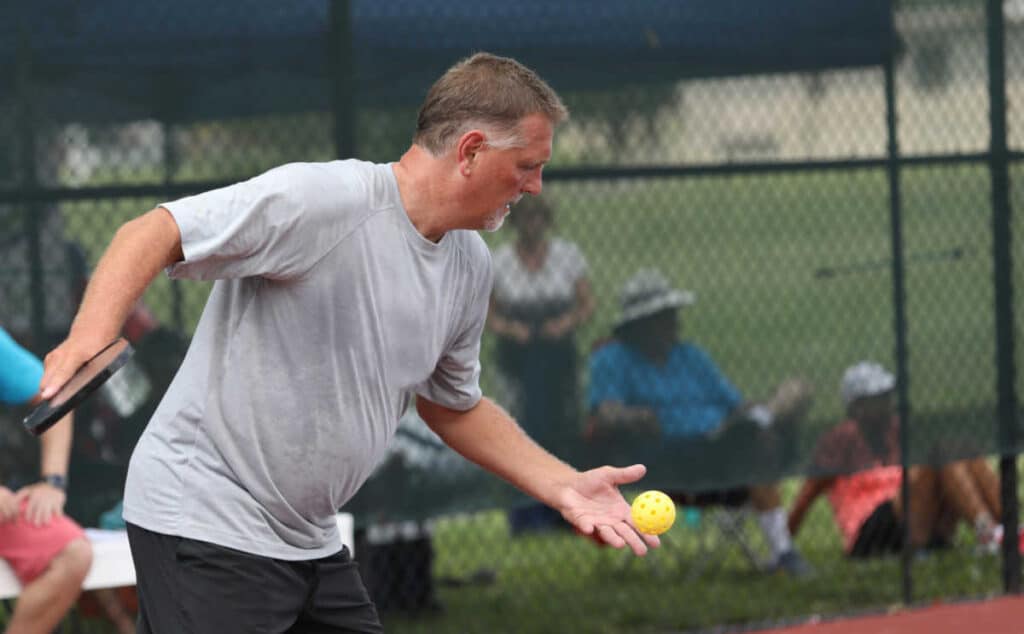
A relatively newer addition to pickleball serving rules is the drop serve. This alternative method allows players to drop the ball from any height and hit it after it bounces on the ground. The volley serve requires the paddle to be below the wrist or contact to be below the waist, but it still must be struck in an upward motion and land in the correct service box. You do not have to worry about this rule if you drop serve though, take your pick.
Faults during serving can occur for several reasons beyond improper form or placement. If the served ball touches any part of the non-volley zone, commonly called the “kitchen,” including the lines, it is considered a fault. The ball must land completely within the appropriate service court. Additionally, if the server misses the ball entirely while attempting to hit it, that also counts as a fault and results in a loss of serve.
In doubles pickleball, keeping track of the server number is essential in scoring (you can download our pickleball scoring printable to help with that too). Each team has a first server and a second server, and players must announce the score correctly before each serve, including which server they are. For example, a typical score call might include three numbers, indicating the serving team’s score, the receiving team’s score, and whether it is the first or second server. This system helps players maintain order and ensures that everyone knows who should be serving.
How to Hit a Great Pickleball Serve
Serving strategy in pickleball often revolves around placement rather than speed. Skilled players aim to hit deep serves that push opponents toward the baseline, making it more difficult for them to approach the net quickly. Others may use angled serves or target an opponent’s weaker side to gain an early advantage in the rally. I like to put a slice on the serve moving the paddle to the left to spin it when hit to the other side making it more difficult to come into contact with it.
Overall, pickleball serving rules are designed to create a balanced and enjoyable game for players of all skill levels. By enforcing underhand motion, proper positioning, and clear service boundaries, the rules promote fairness and consistency. Understanding and following these rules not only helps avoid faults but also allows players to develop effective serving techniques and strategies that can improve their overall performance on the court.
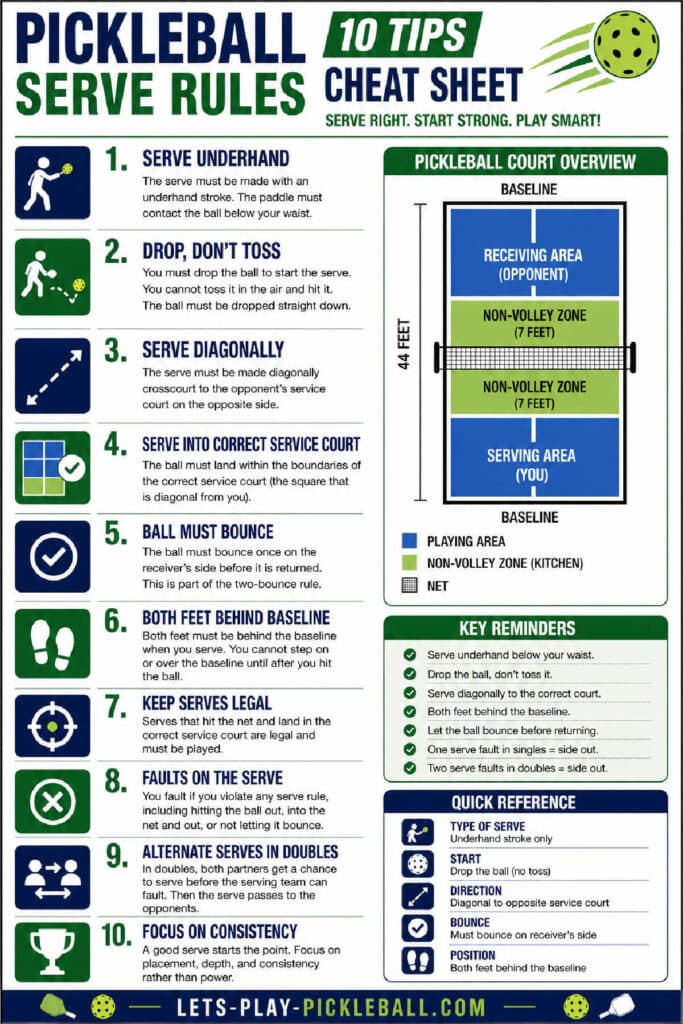
Pickleball Serving Rules PDF
If you want a reminder of what these are or so you can post them in a game for beginners we have the above free pickleball serving rules pdf you can grab and post as great reminders. I also created this black and white bullet point more simple page below with some basic pickleball serving rules printable for you here too. It narrows it down with bullet points to refer to quickly when you are learning all the things.
We have a lot of other free pickleball printables on our site too. From scoring sheets to game rules and so on. Take a peek at the others and take what you wish and share with your friends too! FYI all of these apply to mixed, doubles and for pickleball singles rules (except for the serving).