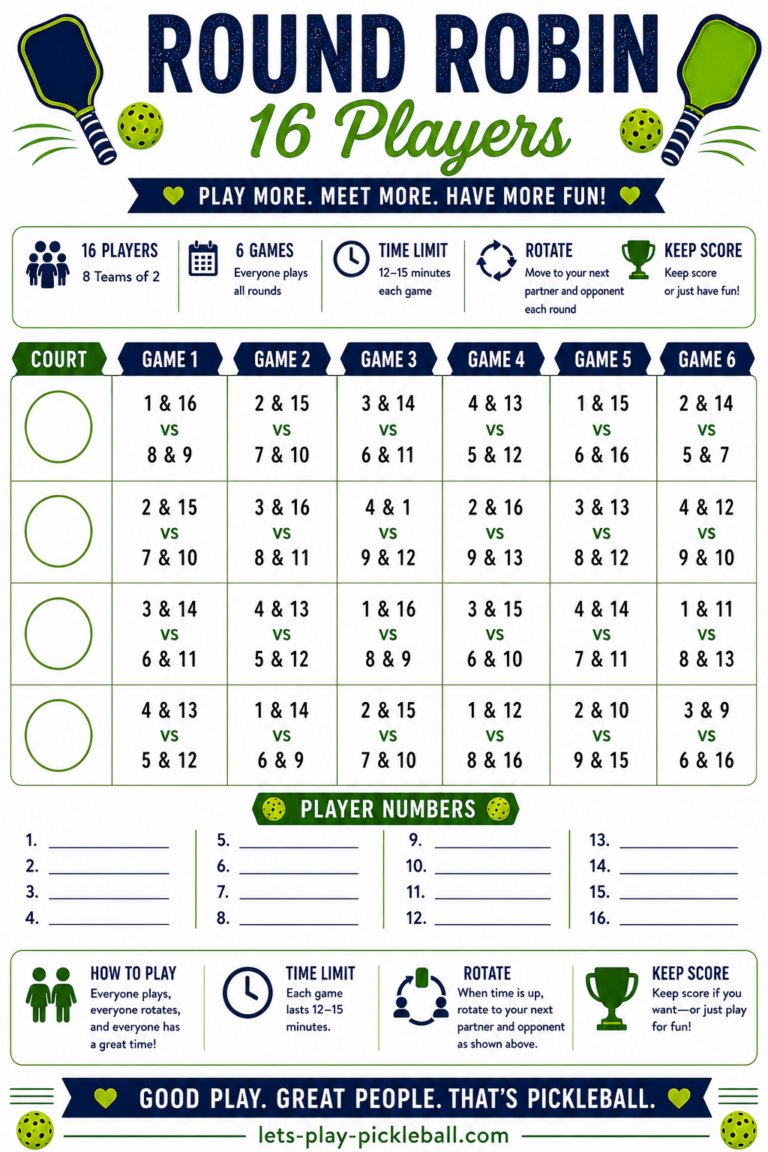
I first created this free pickleball round robin printable to share because I couldn’t find a great one online. It was so popular I got a lot of questions from beginners about what this was and how they could set it up to play with their friends. I guess I took for grated the fact that everyone knew how it was done so now I am here to explain all of the ins and outs of this fun way to play our favorite sport!
What is round robin in pickleball?
A pickleball round robin is one of the most popular and enjoyable ways to organize recreational play because it gives everyone a chance to meet different players, play multiple games, and enjoy a social atmosphere. Unlike a traditional tournament where players may be eliminated after a loss, a round robin keeps everyone involved throughout the event. You typically only play for 12-15 minutes and then rotate your partner, and whom you’re playing against. You play about 6 rounds before it concludes – and there doesn’t have to even be a winner. 😉
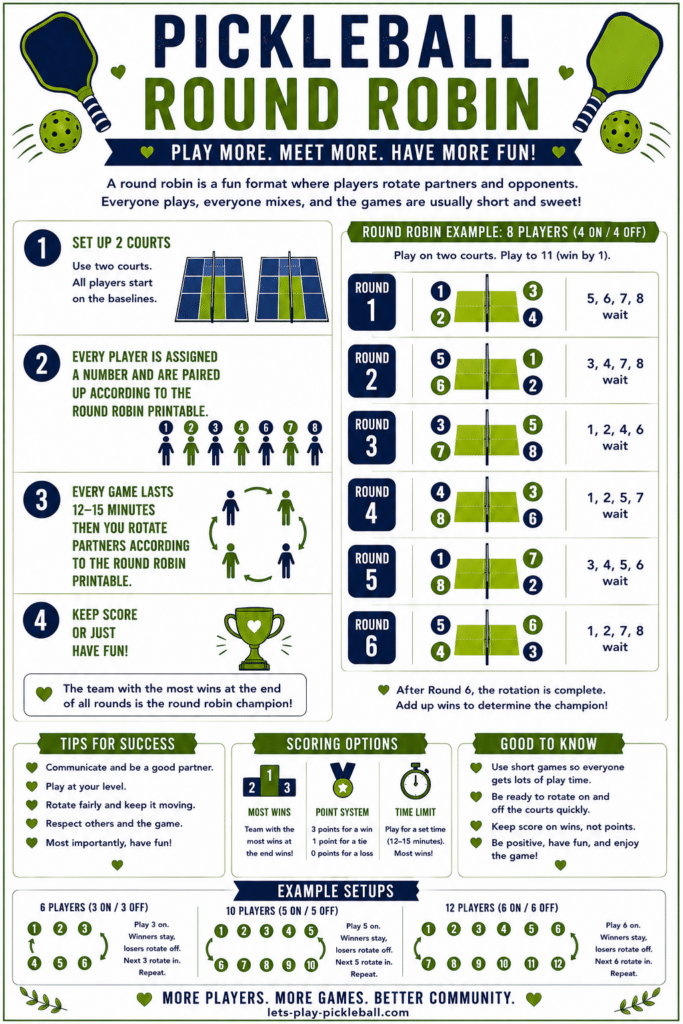
I do have a printable version of the sheet above if you like to have it on hand. It can be helpful if you have several beginners who are unfamiliar with how it works so they can reference it throughout the time frame. You can download the round robin instructions here.
How to Run a Pickleball Round Robin
The first step in organizing is to determine how many players will participate. It work best when there is an even number of players because partnerships and opponents can be rotated smoothly. Common formats include eight, twelve, or sixteen players. Once you know the number of participants, you create or print a round robin schedule that assigns each player a number. Players will then rotate partners and opponents according to the schedule throughout the event.
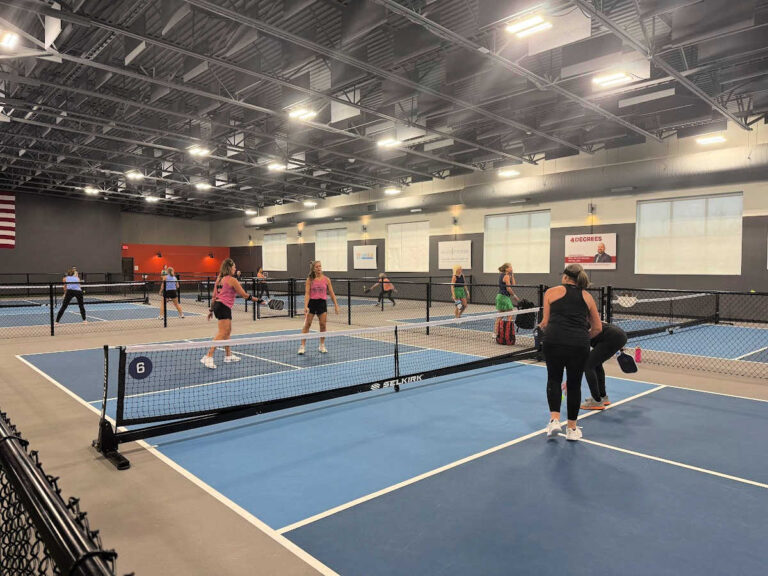
After assigning player numbers, prepare the courts before the event begins. Depending on the number of players, you may need one or more courts. Make sure nets are properly adjusted, court lines are visible, and extra balls are available. Posting the round robin schedule where everyone can easily see it helps keep the event organized and minimizes confusion when it is time to rotate.
Before the first game starts, gather all participants and explain how the round robin will work. Let players know their assigned number and explain that they will follow the schedule rather than choosing their own partners. This system ensures fairness and allows everyone to play with a variety of teammates and opponents throughout the event. Taking a few minutes to explain the process at the beginning can save a lot of questions later.
Once play begins, each game should have a time limit rather than requiring teams to finish a full game to a specific score. Many round robins use a twelve to fifteen minute time limit for each round. It is helpful to have a small timer so when it sounds, play stops and players record their scores if scoring is being tracked. Using a time limit keeps the event moving smoothly and ensures every round finishes at the same time.
After each round, players rotate according to the printed round robin schedule. Players simply move to their next assigned court and partner. Because the schedule has already been created, there is no need to figure out matchups between rounds. This makes transitions quick and allows more time for actual play. Announcing the next round and giving players a minute or two to move to their new court helps keep everything organized.
One of the best features of a round robin is flexibility. Some events focus on competition and keep track of wins, losses, and total points. Other events are designed primarily for fun and social interaction. If you choose to keep score on pickleball score sheets, players can record their results after each game and a winner can be declared at the end of all rounds. If the goal is simply to have fun and meet new players, scores can be ignored altogether. Both approaches are popular and successful.
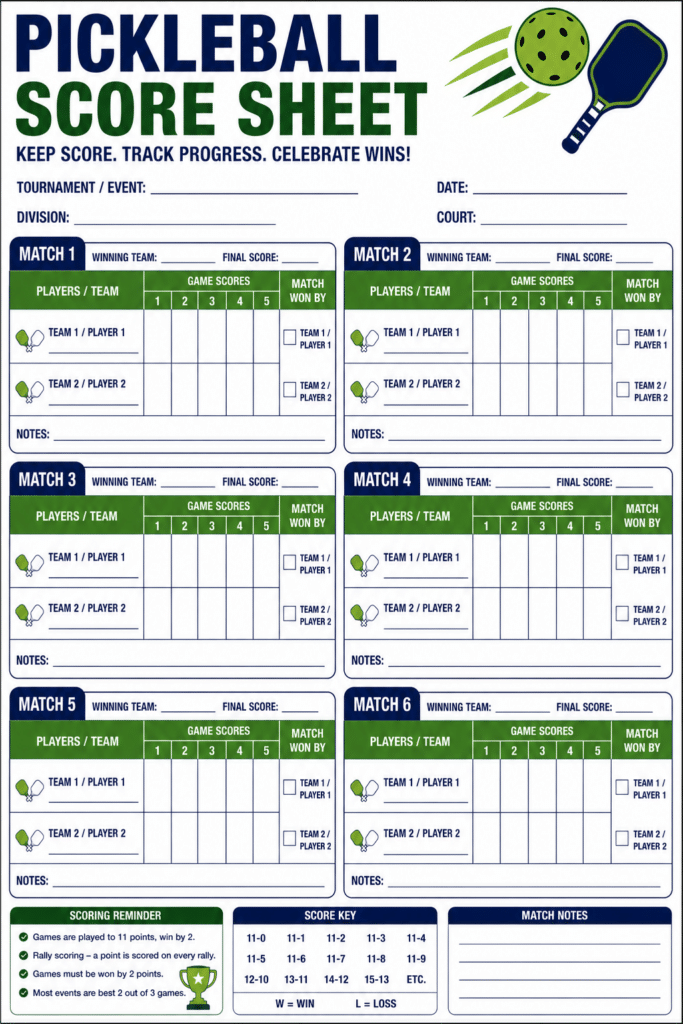
Communication is important throughout the event. The organizer should clearly announce when each round begins and ends. Using a whistle, timer, or portable speaker helps everyone hear instructions. Keeping players informed about how many rounds remain also helps maintain excitement and energy during the event.
Sportsmanship should be emphasized from the start. Round robins are designed to bring players together and create a welcoming environment. Encourage players to support their partners, respect opponents, and focus on enjoying the experience. Because participants play with many different teammates throughout the event, positive attitudes help create a fun atmosphere for everyone involved.
Provide water, snacks, and shaded rest areas. These can improve the overall experience, especially during outdoor events. Since players may spend several hours rotating through multiple rounds, comfort and hydration become important factors. Small details like these can make the event feel well organized and encourage players to return for future round robins.
At the conclusion of the final round of 8, 12, or pickleball round robin 24 players, gather participants together for closing announcements. If scores were tracked, recognize the top performers and congratulate the winners. Some organizers award small prizes, medals, or certificates. Even if scores were not kept, thanking everyone for participating and recognizing the spirit of the event helps create a positive ending.