Pickleball kitchen rules are one of the most important parts of the game and often one of the most confusing for new players. The kitchen is the common name for the non volley zone, which is the seven foot area on both sides of the net. This space plays a major role in how points are played and prevents players from dominating the net with aggressive shots. Let us explain them to you and provide a free pickleball printable of them too!
Rules for the Kitchen in Pickleball
1 – The most basic rule is that you cannot volley the ball while standing in the kitchen. A volley means hitting the ball out of the air before it bounces. If any part of your body or even your paddle touches the kitchen while you are volleying, it is considered a fault and the point goes to the other team. This rule also applies if your momentum carries you into the kitchen after you hit a volley. Even if you make contact with the ball outside the kitchen, stepping into the kitchen right after the shot still results in a fault.
2 – It is important to understand the answer to can you step in the kitchen? The answer is yes you are allowed to stand in the kitchen at any time, just not when volleying the ball. Many beginners think the kitchen is completely off limits, but that is not true. You can step into the kitchen to hit a ball that has bounced. This is actually a common strategy during soft play near the net. After hitting the ball, you can either stay in the kitchen or move back out, depending on the situation.
3 – Another key kitchen rule is related to the double bounce rule. When a serve is made, the receiving team must let the ball bounce before returning it, and then the serving team must also let it bounce before hitting it. After these two bounces occur, players are allowed to volley the ball, but they still must respect the kitchen boundaries. This sequence naturally leads players toward the kitchen line, where much of the game is played.
4 – The kitchen line itself is part of the kitchen. This means that if your foot touches the line while volleying, it is treated the same as stepping fully into the kitchen. Players must be careful with their positioning and balance when playing close to the line. Good players learn to stop just short of the line or hover just behind it to stay legal while maintaining an aggressive position.
5 – Another situation to watch for is you cannot fall into the kitchen after hitting a volley. That means if you hit a volley (a ball out of the air without bouncing) while outside the kitchen but then fall forward and step into the kitchen, it is still a fault. Players need to stay under control and avoid leaning too far forward when hitting shots near the net. Good footwork and body control are essential for staying within the rules.
It is also worth noting that anything you are wearing or holding counts when it comes to kitchen faults. If your paddle, hat, or even something in your pocket touches the kitchen during a volley, it can result in a fault. This reinforces the idea that players must be aware of their entire body position at all times.
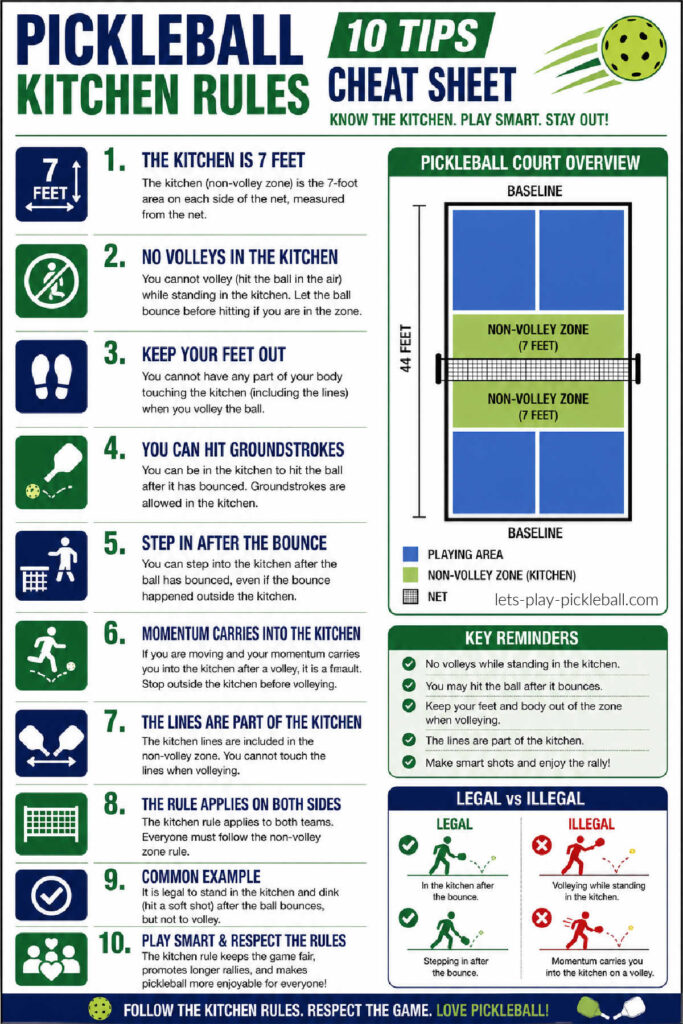
If you would like to print out a copy of the page above as a reminder of what you can and cannot do during the game you can. I have a link to our pickleball kitchen rules PDF here that may be helpful to display if you are beginning and want to play properly.
Why is there a kitchen in pickleball?
One of the main reasons the kitchen rule exists is to prevent players from smashing every shot at the net. Without this rule, the game would be dominated by tall and aggressive players who could stand right at the net and hit every ball downward. The kitchen forces players to develop control, touch, and patience. This is where the dink shot becomes important. A dink is a soft shot that lands in the opponent’s kitchen and is often used to control the pace of the game.
When both teams are positioned near the kitchen line, you will often see longer rallies with controlled shots instead of powerful hits. Players are trying to create an opportunity to attack without breaking the rules. The kitchen encourages strategy rather than pure power, which is one of the reasons this game is accessible and enjoyable for players of all skill levels.
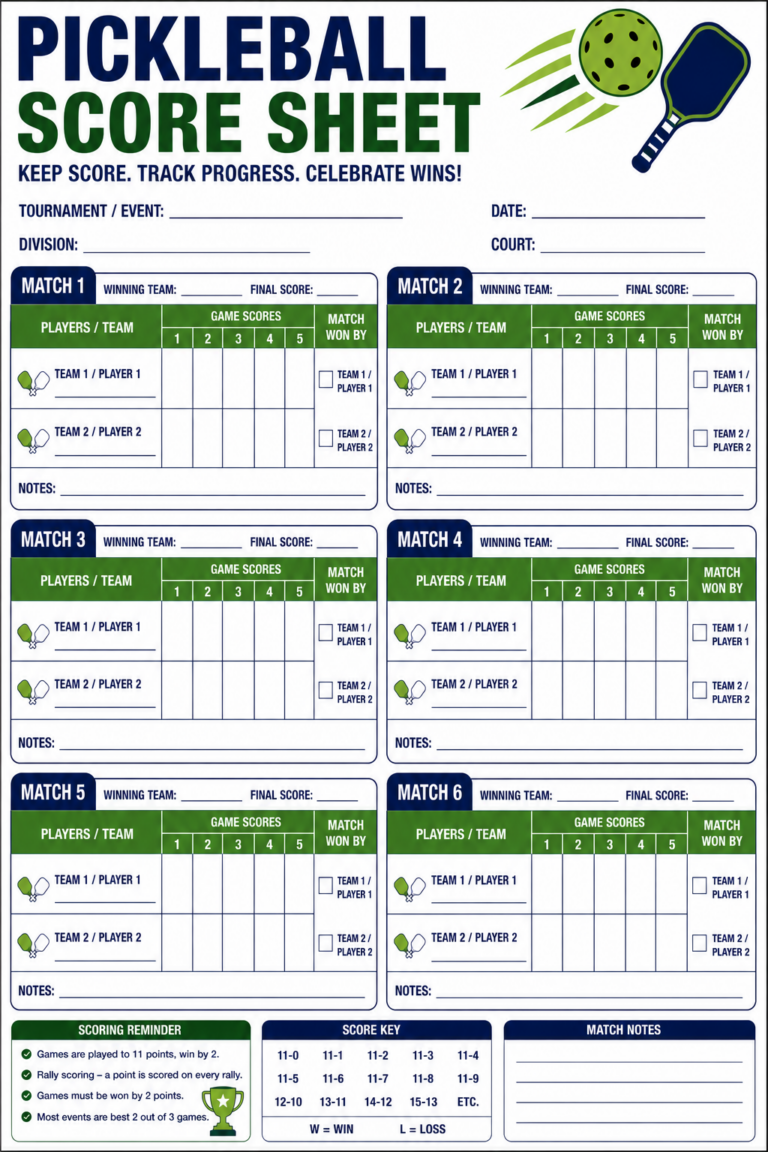
Learning pickleball scoring rules will be helpful as well at the beginning. If you want to play correctly don’t skip the steps or others will be aggravated and call you out on it for sure. 😉 Once you have it down pat reach out to others your skill level to create fun games to improve.
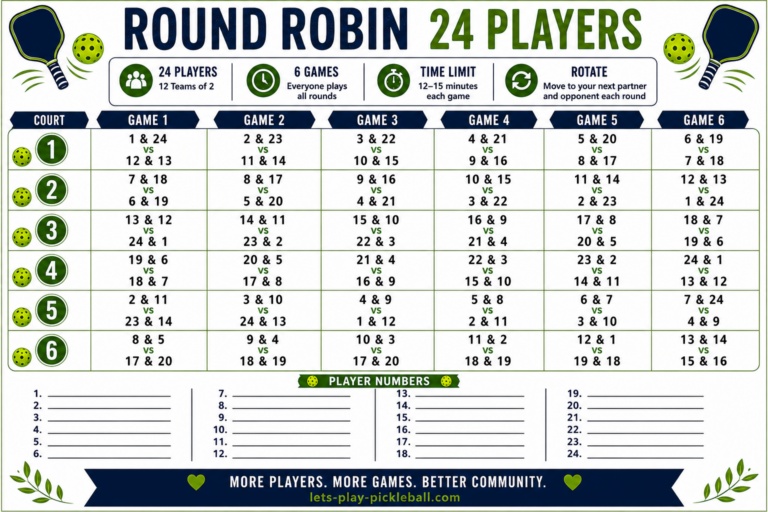
Over time you will meet enough people that want to play where you can get 8-12 people to play at once. Use our Pickleball Round Robin Printable and it will open up a whole new world for you as far as FUN I tell you, you’re welcome. 😉